

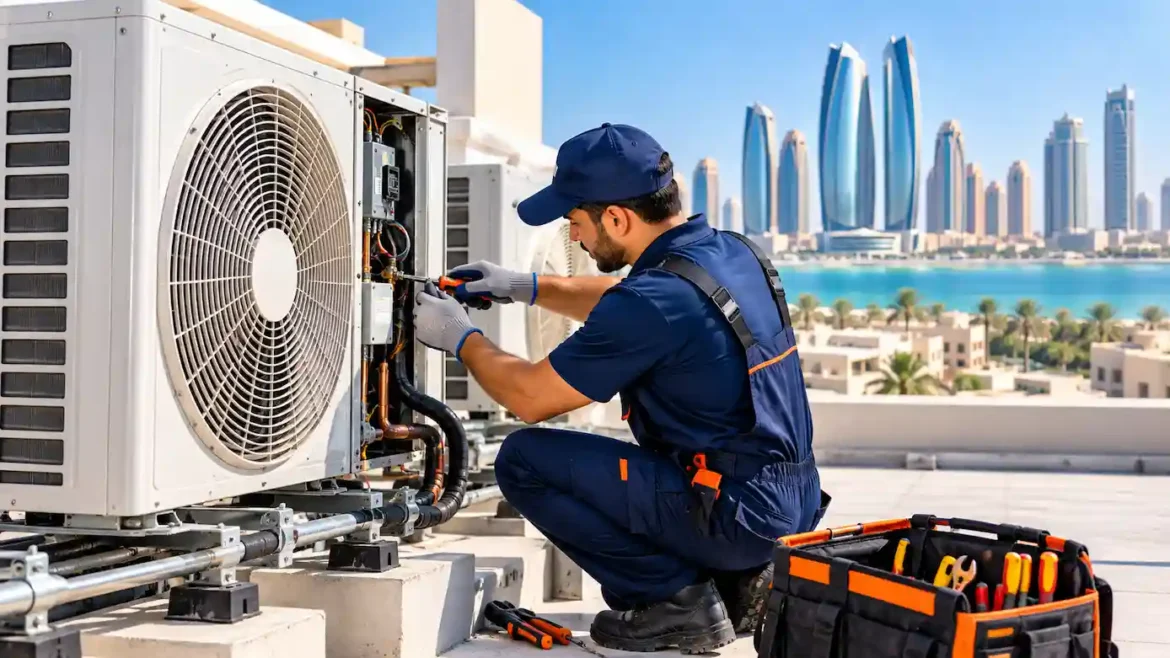
Installing an air-conditioning system is not just about choosing a unit and switching it on. The system needs to suit the property, the rooms it will cool, and the way people use the space. Get those details wrong, and even a new AC may struggle to keep the building comfortable.
HVAC installation Abu Dhabi is an important consideration for homeowners, villa owners, landlords and businesses planning a new cooling system or upgrading an existing one. Abu Dhabi’s hot weather places considerable demand on air conditioning, so the installation needs to be planned around the property’s actual cooling requirements.
GSTAR AC Repair Services provides AC installation, repair and maintenance services in Abu Dhabi for residential and commercial properties. Here is what to consider before installing an HVAC system.
Table of Contents
What Is HVAC Installation?
HVAC stands for heating, ventilation and air conditioning. It refers to the equipment and systems used to manage indoor temperature, air movement and ventilation.
In Abu Dhabi, cooling is often the main concern. However, the complete system still matters. Air needs to reach the rooms properly, controls must work as intended, and the equipment needs suitable installation space.
Depending on the property, an installation may involve split AC units, ducted air conditioning or a larger central cooling arrangement. The right choice depends on the building rather than simply the size of the equipment.
For example, a small apartment with two separate rooms has different needs from a villa with several bedrooms and a large living area. An office with multiple workspaces presents another set of requirements.
How to Choose an HVAC System for Your Property
Before selecting an air-conditioning system, consider how the property is laid out and how each space will be used.
1. Consider the Size of the Property
Floor area is a useful starting point, but it does not tell the whole story. Ceiling height, window size, sunlight, insulation, occupancy and the number of rooms can all affect cooling demand.
A large room with several sun-facing windows may need more cooling capacity than a smaller, shaded room. Likewise, an office filled with computers and people can produce more heat than an unused room of the same size.
The system should be selected according to the property’s cooling load. Choosing equipment based only on square footage can lead to poor performance.
2. Decide Between Split AC and Ducted AC
The type of system affects installation work, appearance and how cool air reaches each room.
Split AC systems are often suitable for individual rooms, apartments and certain smaller commercial spaces. Each indoor unit serves a particular area, giving occupants control over that space.
Ducted AC systems distribute conditioned air through ducts and vents. They can suit villas, larger homes, offices and commercial properties where a more integrated arrangement is preferred.
Neither option is automatically better for every property. The available installation space, layout, cooling requirements and budget all matter.
3. Think About Daily Use
A family home, a retail shop and a busy office do not use cooling in the same way.
Bedrooms may need comfortable temperatures overnight. A shop may need consistent cooling during business hours. An office may have changing occupancy throughout the day.
These details can affect the type of system, its capacity and the controls required. Discussing how the property is used before installation helps avoid choosing equipment that does not suit everyday needs.
Why Correct HVAC Installation Matters in Abu Dhabi
A new AC system can only perform as intended when its installation is suitable for the equipment and the building.
Better Cooling Across the Property
If the equipment is incorrectly sized or the air distribution is poorly planned, some rooms may feel comfortable while others remain warm.
Proper planning considers where cooling is needed and how air will reach each area. For ducted systems, the duct layout and air outlets are especially important.
Energy Use Depends on More Than the AC Unit
Buying an energy-efficient unit is a good starting point, but it is not the only factor affecting electricity consumption.
An incorrectly sized system, restricted airflow, poor installation or unsuitable controls can affect performance. The building’s insulation and exposure to sunlight also make a difference.
The goal is to install a system that can meet the property’s cooling needs without unnecessary strain.
Suitable Drainage and Pipework
Air conditioners produce condensation during normal operation. The installation must allow this water to drain properly.
Refrigerant pipework, electrical connections and drainage routes also need to be suitable for the system. Poorly arranged connections or drainage can create problems that may not appear immediately.
These details deserve attention before the equipment is put into regular use.
Access for Future Maintenance
An AC system will need maintenance after installation. Filters may require cleaning, and technicians may need access to certain components during servicing.
Placing equipment where it can be accessed safely makes future maintenance more practical. This is especially important when planning systems for commercial buildings or properties with limited service space.
What Happens During an HVAC Installation?
The exact process varies according to the equipment and the property, but a well-planned installation generally follows several steps.
Understanding the Property’s Requirements
The first step is to understand the building layout, cooling requirements and preferred system type. The installation location, available space, electrical requirements and drainage arrangements also need consideration.
This information helps determine which installation approach is suitable.
Selecting the Equipment
The system’s capacity should match the calculated cooling demand. An undersized unit may struggle during hot weather, while an oversized system may cycle inefficiently or fail to manage humidity as intended.
The selection should account for the property’s layout and actual use rather than relying on a rough guess.
Installing the Indoor and Outdoor Equipment
Depending on the system, installation may involve positioning indoor units, placing outdoor equipment, connecting refrigerant pipework and arranging drainage.
For ducted systems, the work may also involve ducts, vents and air distribution components.
Equipment placement matters. The units need suitable clearance and access, and the installation must follow the manufacturer’s requirements.
Checking Connections and System Operation
Before the system is put into normal use, relevant connections and controls should be checked. The installer should follow the manufacturer’s commissioning procedure and confirm that the system operates as intended.
The checks depend on the equipment, but may include airflow, drainage, electrical connections, control settings and cooling operation.
A new system should not simply be switched on and assumed to be ready.
HVAC Installation for Villas and Homes
Residential installations need to consider comfort in individual rooms as well as the property as a whole.
In a villa, bedrooms, living rooms, kitchens and upper floors may have different cooling requirements. Sunlight and heat entering through windows can also affect room temperatures.
A ducted system may suit a property designed around central air distribution. Split AC units may be more practical where individual rooms need separate systems or the building layout favours them.
For apartments, available outdoor-unit space, building rules, drainage and electrical arrangements may limit the options. These details should be checked before equipment is purchased.
If you are replacing an old system, do not assume that the previous unit’s capacity is automatically correct. Renovations, changes to room use or improvements to the building may affect what is needed.
HVAC Installation for Offices and Commercial Properties
Commercial spaces often have different demands from homes. Occupancy may change throughout the day, and equipment, lighting and sunlight can add to the heat inside the building.
An office with several meeting rooms, for instance, may need a different cooling arrangement from a small shop. Restaurants and other busy commercial spaces can have their own ventilation and cooling considerations.
Planning should take into account operating hours, the number of people using the space, the building layout and access for future servicing.
For a larger installation, the building’s technical requirements and applicable approvals should be confirmed before work begins. Do not assume that the same system used in a small office will suit an entire commercial building.
Common HVAC Installation Mistakes to Avoid
Some installation decisions can create problems long after the work is finished.
Choosing a system by price alone. A low initial price does not necessarily mean the system is suitable for the property. Consider the equipment’s capacity, installation requirements and ongoing maintenance needs.
Ignoring room-by-room cooling needs. Rooms can receive different amounts of sunlight and have different occupancy levels. Treating every room as identical can lead to uneven comfort.
Overlooking drainage. Condensation needs a suitable drainage route. Poor drainage arrangements can result in water problems later.
Leaving no room for servicing. Equipment that is difficult to access can make routine maintenance more complicated.
Skipping final checks. Controls, airflow, drainage and relevant connections should be checked as part of the installation and commissioning process.
Avoiding these mistakes starts with proper planning. It is usually easier to address installation requirements before the equipment is fitted than after the building is in use.
Should You Replace an Old AC System or Install a New One?
The answer depends on the condition of the existing equipment and the needs of the property.
If the current system still suits the building and has a repairable fault, repairing it may be reasonable. If the equipment is frequently breaking down, no longer meets the property’s cooling needs or requires major work, replacement may deserve consideration.
A new installation may also be necessary when a property is being renovated, extended or fitted out for a different purpose.
Compare the condition of the existing system, the likely repair requirements and the suitability of a replacement. The cheapest immediate option is not always the most practical over time, but replacing equipment that can still serve the property may also be unnecessary.
Ask for a clear explanation of the work involved before making a decision.
HVAC Installation and Maintenance Go Together
Installation is only the beginning. Filters collect dust, drainage can become obstructed, and components may need attention as the system operates.
Regular maintenance helps keep the equipment in suitable working condition. The appropriate schedule depends on the system, its usage, the manufacturer’s guidance and the property’s environment.
For example, an AC system that runs for long periods in a dusty environment may need more frequent attention than a unit used occasionally.
After installation, keep the equipment information and maintenance instructions available. Report unusual noises, reduced cooling or water leakage rather than ignoring changes in performance.
Maintenance cannot prevent every fault, but it can help identify certain problems before they become more disruptive.
HVAC Installation Services in Abu Dhabi
Choosing an HVAC installation service starts with understanding what the property needs. The type of AC, the available installation space, the cooling requirements and future maintenance access all deserve consideration.
GSTAR AC Repair Services provides AC installation, repair and maintenance for homes, villas, offices and commercial properties in Abu Dhabi. Our services include split AC, window AC, duct AC and HVAC repair and maintenance, as well as AC installation.
We focus on the requested service and clear communication about the work involved. If you are planning a new installation or replacing an existing system, share the property type, location and your cooling requirements so the appropriate service can be discussed.
Contact GSTAR AC Repair Services
Phone: +971 56 370 0564
WhatsApp: https://wa.link/b0rc6k
Website: https://gstaracrepair.com/
Whether you are fitting out a new property or planning to replace an existing air-conditioning system, start with the building’s actual requirements. A suitable system and careful installation can make a real difference to everyday comfort.
Frequently Asked Questions
1. How much does HVAC installation cost in Abu Dhabi?
The cost depends on the system type, cooling capacity, property layout, installation complexity, pipework, ducting and other required materials. Contact GSTAR with details about your property to discuss your installation requirements and applicable charges.
2. Which HVAC system is best for a villa in Abu Dhabi?
There is no single best system for every villa. Ducted AC may suit a property designed for central air distribution, while split AC units may be suitable for individual rooms. The building layout, cooling demand, available space and budget should guide the choice.
3. Is split AC or ducted AC better for an office?
It depends on the office layout and how the space is used. Split AC may suit smaller or separate rooms, while ducted AC can distribute air across a larger area. A suitable choice requires consideration of cooling demand, room arrangement and installation requirements.
4. How long does HVAC installation take?
The time required varies according to the system and the work involved. Installing an individual split AC is generally less complex than installing a ducted system throughout a property. Site conditions, access, pipework, ducting and other requirements affect the schedule.
5. Can an HVAC system be installed in an existing building?
Yes, installation or replacement may be possible in an existing property. The available space, electrical arrangements, drainage, duct routes and building requirements need to be considered before choosing the system and planning the work.
6. Does a new HVAC system need maintenance?
Yes. New equipment still needs care according to the manufacturer’s instructions. Regular maintenance can help keep filters, drainage and other relevant components in suitable condition and can identify certain problems before they worsen.
7. Does GSTAR provide HVAC installation in Abu Dhabi?
GSTAR provides AC installation services in Abu Dhabi, along with repair and maintenance for split AC, window AC, duct AC and HVAC systems. Contact the team to discuss your property and the installation service you require.
